Table of Contents
- The Hidden Business Benefits of Dynamic QR Codes
- What Makes a Dynamic QR Code Different?
- Saving Money Without Sacrificing Marketing Quality
- Turning Printed Materials into Living Marketing Assets
- Keeping Every Customer on the Latest Information
- Learning What Customers Actually Do
- Creating More Personalized Customer Experiences
- Building Stronger Customer Relationships Through Continuous Engagement
- Improving Marketing Campaign Performance
- Making Customer Support Faster and More Convenient
- Supporting Sustainable Business Practices
- Helping Businesses Respond Quickly to Change
- Valuable Business Insights Through QR Code Analytics
- Creating More Personalized Customer Experiences
- Industries That Benefit from Dynamic QR Codes
- Best Practices for Using Dynamic QR Codes
- Conclusion
The Hidden Business Benefits of Dynamic QR Codes
QR codes have become a familiar part of everyday life. People use them to view restaurant menus, make digital payments, access websites, download mobile applications, register for events, and even share contact information. Because they are so common, many businesses think of QR codes as nothing more than a convenient way to direct customers to a webpage. While that is certainly one of their uses, it barely scratches the surface of what modern QR code technology can actually do. In reality, Dynamic QR Codes have evolved into powerful business tools that help organizations improve marketing, strengthen customer relationships, simplify operations, and make better business decisions.
Many companies still rely on traditional marketing methods where printed materials remain unchanged after they are distributed. A brochure, flyer, product label, billboard, or business card is usually designed once and printed in large quantities. If a website changes, a campaign ends, or new information needs to be shared, businesses often have to reprint everything, creating unnecessary costs and delays. Dynamic QR Codes eliminate this problem by allowing the destination behind the QR code to be updated at any time without changing the printed code itself. This simple feature opens the door to opportunities that many businesses never consider.
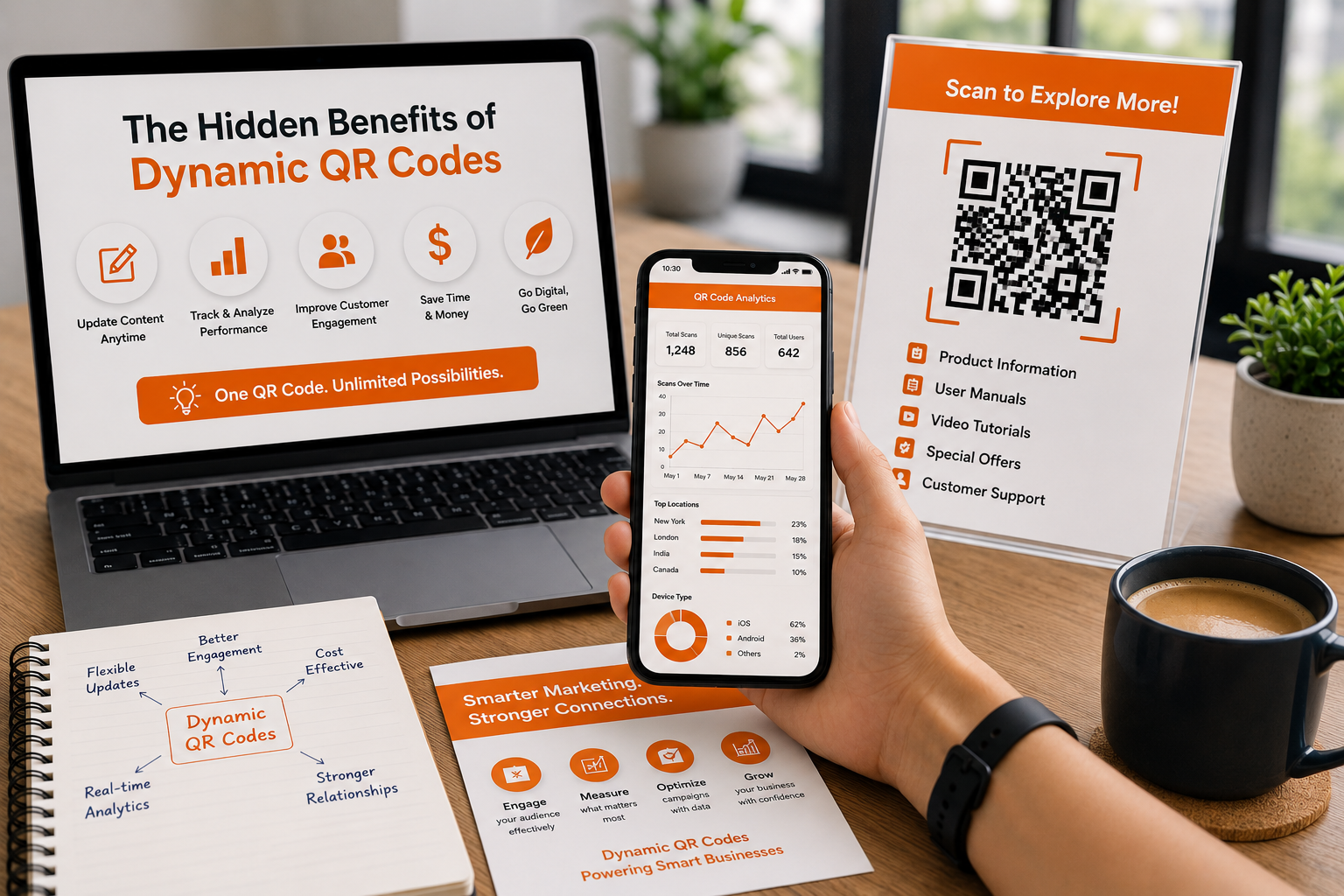
Beyond flexibility, Dynamic QR Codes also provide valuable insights into customer behavior. Every scan can help businesses understand how customers interact with their products, campaigns, and services. Instead of relying on assumptions, organizations gain access to real information that supports smarter marketing decisions and more meaningful customer engagement.
Whether you own a retail store, manage a restaurant, operate a manufacturing company, run a healthcare organization, or work in professional services, Dynamic QR Codes can become much more than a digital shortcut. They can help reduce costs, improve efficiency, increase customer engagement, and create a more connected business experience. Many of these advantages remain hidden because businesses focus only on the basic function of a QR code rather than exploring its full potential.
In this article, we will explore the lesser-known business benefits of Dynamic QR Codes and explain why they have become an essential tool for organizations looking to grow in an increasingly digital world.
What Makes a Dynamic QR Code Different?
At first glance, a Dynamic QR Code looks exactly like any other QR code. Customers scan it with their smartphone, and it instantly opens digital content. However, the technology behind a Dynamic QR Code is very different from a traditional static QR code.
A static QR code permanently stores one destination. Once it has been created and printed, the information cannot be changed. If the linked webpage changes or a marketing campaign ends, the QR code becomes outdated and often needs to be replaced completely.
A Dynamic QR Code works differently. Instead of permanently storing one destination, it stores a short redirect link that can be updated whenever needed. This means the same printed QR code can continue working even if the website, document, video, contact information, or landing page changes.
For businesses, this flexibility removes one of the biggest challenges associated with printed marketing materials. Instead of worrying about outdated information, they can simply update the destination online while keeping the same QR code in use.
Saving Money Without Sacrificing Marketing Quality
Every business invests money in printed marketing materials. Product packaging, catalogs, posters, brochures, banners, business cards, event displays, and promotional flyers all require time and resources to produce. If information changes after printing, many businesses face the expensive task of redesigning and reprinting those materials. Dynamic QR Codes significantly reduce these costs.
Imagine a company launching a seasonal promotion. Thousands of brochures are printed with a QR code leading customers to a special offer. Halfway through the campaign, the promotion changes or new products become available. With a static QR code, those brochures may become outdated. With a Dynamic QR Code, the business simply updates the destination online, allowing every existing brochure to continue providing accurate information.
Over the course of a year, this flexibility can save businesses a considerable amount of money while ensuring that customers always receive the latest information.
Turning Printed Materials into Living Marketing Assets
Traditionally, printed materials have always been static. Once distributed, their content remains unchanged. Dynamic QR Codes transform these materials into digital gateways that can evolve over time.
A product package printed today can lead customers to installation guides this month, promotional offers next month, customer surveys after that, and loyalty rewards later in the year. The printed package never changes, but the digital experience continues to grow.
This means businesses no longer think of printed materials as one-time marketing investments. Instead, every brochure, catalog, label, or poster becomes an ongoing communication channel capable of delivering fresh content throughout its lifespan.
Keeping Every Customer on the Latest Information
One of the hidden challenges businesses face is maintaining consistent communication across multiple locations and marketing channels. Information changes regularly. Business hours are updated, product collections expand, pricing changes, event schedules are revised, and promotional campaigns begin or end.
Without Dynamic QR Codes, businesses often struggle to ensure customers always receive accurate information.
Dynamic QR Codes solve this problem by centralizing updates. Instead of replacing printed materials in dozens of stores or offices, businesses simply update the destination once. Every customer who scans the QR code immediately receives the latest version of the information.
This reduces confusion while improving customer confidence because people know they are always viewing current content.
Learning What Customers Actually Do
Many businesses spend large amounts of money on marketing without fully understanding which campaigns perform best. They distribute flyers, print banners, advertise in magazines, attend exhibitions, and display posters, yet measuring the effectiveness of each activity can be difficult.
Dynamic QR Codes provide valuable analytics that help answer important business questions.
Businesses can learn:
- Which marketing campaigns receive the most scans.
- Which locations generate the highest customer engagement.
- What days and times customers interact most frequently.
- Which products attract the greatest interest.
- Which printed materials produce the strongest results.
Instead of relying on assumptions, businesses gain measurable insights that help improve future marketing decisions.
Creating More Personalized Customer Experiences
Today's customers expect businesses to understand their needs and provide relevant experiences. Generic communication is becoming less effective because people prefer content that reflects their interests.
Dynamic QR Codes make personalization easier by directing different audiences to different digital experiences without changing the printed code.
For example, the same QR code on a product can be updated to highlight seasonal collections, educational content, customer support, or exclusive promotions based on business objectives. This flexibility allows companies to keep customer interactions fresh and relevant throughout the product's lifecycle.
Building Stronger Customer Relationships Through Continuous Engagement
One of the biggest advantages of Dynamic QR Codes is that they allow businesses to continue interacting with customers long after the initial purchase or first meeting. Traditionally, once a customer bought a product or received a brochure, the communication often ended there. Businesses had very few opportunities to reconnect unless the customer decided to visit again. Dynamic QR Codes completely change this approach by turning every product, package, brochure, catalogue, business card, or promotional banner into an ongoing communication channel.
For example, a customer who scans a QR code on a product package today may initially be directed to a product guide or user manual. A few weeks later, the same QR code can be updated to offer maintenance tips, exclusive discounts, new product launches, or customer surveys without requiring any changes to the packaging itself. This keeps the interaction alive and encourages customers to return to the brand repeatedly. Instead of viewing QR codes as one-time tools, businesses can use them to create continuous engagement throughout the customer journey.
This ongoing communication also helps businesses build trust. Customers appreciate brands that continue providing useful information after the sale rather than focusing only on making the purchase. Over time, these helpful interactions contribute to stronger loyalty and a better overall customer experience.
Improving Marketing Campaign Performance
Every marketing campaign represents an investment, whether it involves newspaper advertisements, magazine promotions, billboards, trade shows, product packaging, social media, or printed brochures. Businesses naturally want to know which campaigns are generating the best results so they can invest their marketing budget more effectively.
Dynamic QR Codes provide valuable campaign insights by allowing businesses to measure customer engagement through scan analytics. Instead of guessing which advertisements attracted attention, companies can monitor how many people scanned each QR code, where those scans came from, and when they occurred. This information helps marketers identify successful campaigns while also revealing areas that need improvement.
Imagine a business promoting the same product through posters in shopping malls, brochures distributed at exhibitions, newspaper advertisements, and product packaging. By assigning different Dynamic QR Codes to each marketing channel, the company can compare performance across every campaign. If exhibition brochures generate significantly more scans than newspaper advertisements, future marketing budgets can be adjusted accordingly. Decisions become data-driven rather than based on assumptions, allowing businesses to maximize the return on their marketing investment.
Making Customer Support Faster and More Convenient
Customer support is an essential part of every successful business. However, many companies still rely on traditional methods such as printed manuals, customer service phone calls, or email support. These methods often require customers to spend valuable time searching for information or waiting for assistance.
Dynamic QR Codes simplify this process by providing immediate access to the exact information customers need. A QR code placed on a product, machine, appliance, or service document can instantly direct users to troubleshooting guides, frequently asked questions, installation videos, maintenance instructions, warranty information, or live support pages.
If product information changes over time, businesses simply update the digital content linked to the Dynamic QR Code without replacing the printed code. Customers always receive the latest instructions, reducing confusion and improving satisfaction. This approach also helps customer service teams because many common questions can be answered through self-service resources, allowing support staff to focus on more complex issues.
Supporting Sustainable Business Practices
Sustainability has become an important priority for organizations across every industry. Customers increasingly value businesses that actively reduce waste and adopt environmentally responsible practices. Dynamic QR Codes contribute to these efforts by reducing the need for unnecessary printing.
Printed catalogues, instruction manuals, promotional leaflets, restaurant menus, and event schedules often require frequent updates. Traditionally, every change meant discarding outdated materials and printing new versions. Dynamic QR Codes eliminate much of this waste because businesses can simply update digital content while keeping the same printed QR code.
This not only reduces printing expenses but also supports environmentally conscious business practices. Companies can provide richer digital experiences while minimizing paper consumption, making Dynamic QR Codes an excellent solution for organizations pursuing long-term sustainability goals.
Helping Businesses Respond Quickly to Change
Business environments rarely remain the same for long. Product availability changes, prices are updated, seasonal promotions begin, events are rescheduled, and new services are introduced regularly. Traditional printed marketing materials often struggle to keep pace with these changes.
Dynamic QR Codes provide the flexibility businesses need to adapt quickly. A single QR code printed on thousands of brochures, posters, or product packages can instantly direct customers to updated information whenever necessary. Businesses no longer need to worry about outdated printed materials remaining in circulation because the destination behind the QR code can always reflect the latest information.
This flexibility becomes especially valuable during product launches, promotional campaigns, and rapidly changing business conditions. Organizations can react quickly without incurring the costs associated with reprinting marketing materials.
Valuable Business Insights Through QR Code Analytics
One of the most overlooked advantages of Dynamic QR Codes is the wealth of information they provide about customer behavior. Every scan offers businesses an opportunity to understand how customers interact with their brand, products, and marketing campaigns.
These insights can answer important business questions such as:
- Which products generate the highest customer interest?
- Which marketing campaigns attract the most engagement?
- Which locations produce the greatest number of scans?
- What time of day are customers most active?
- Which promotional campaigns encourage repeat visits?
Rather than relying on estimates or assumptions, businesses can make informed decisions based on real customer interactions. This allows organizations to improve marketing strategies, optimize product placement, and deliver experiences that better match customer expectations.
Creating More Personalized Customer Experiences
Modern customers appreciate experiences that feel relevant to their interests rather than generic marketing messages sent to everyone. Dynamic QR Codes make personalization much easier because businesses can continuously update digital content based on changing customer needs and business goals.
For example, the same QR code on a product package may initially display installation instructions. Later, it can be updated to provide maintenance tips, customer loyalty rewards, educational videos, or recommendations for related products. Seasonal promotions, festival offers, and limited-time campaigns can all be introduced through the same printed QR code without requiring new packaging.
This flexibility allows businesses to keep customer interactions fresh and meaningful throughout the entire customer journey. Instead of becoming outdated after the first scan, Dynamic QR Codes continue delivering value long after the initial purchase.
Industries That Benefit from Dynamic QR Codes
Although Dynamic QR Codes are useful for almost every business, some industries benefit particularly well because of their need for regular communication and frequently updated information.
Dynamic QR Codes are widely used in:
- Retail stores for product information, loyalty programs, and promotional campaigns.
- Restaurants for digital menus, seasonal offers, and customer feedback.
- Healthcare organizations for patient information and appointment updates.
- Educational institutions for admissions, learning resources, and event announcements.
- Real estate companies for property listings and virtual tours.
- Manufacturing businesses for equipment manuals, maintenance records, and safety instructions.
- Hospitality businesses for guest services, local guides, and hotel information.
- Event organizers for registrations, schedules, speaker information, and digital brochures.
Regardless of industry, Dynamic QR Codes help organizations provide better information while reducing operational complexity.
Best Practices for Using Dynamic QR Codes
To maximize the value of Dynamic QR Codes, businesses should focus on creating meaningful customer experiences rather than simply directing users to a webpage.
A few simple practices can make a significant difference:
- Keep the destination page mobile-friendly.
- Update content regularly to maintain relevance.
- Place QR codes where customers can easily notice and scan them.
- Include a short call-to-action encouraging people to scan.
- Monitor analytics regularly and improve campaigns based on customer behavior.
- Test QR codes before printing to ensure a smooth user experience.
Following these practices helps businesses create more successful campaigns while improving customer satisfaction.
Conclusion
Dynamic QR Codes have evolved far beyond being simple tools for sharing links. They have become powerful business solutions that help organizations stay flexible, improve customer engagement, reduce operational costs, and make smarter decisions through real-time insights. Unlike static QR codes, Dynamic QR Codes allow businesses to update content at any time without replacing the printed QR code, making them a practical and cost-effective solution for today's fast-changing business environment. Whether used on product packaging, brochures, business cards, advertisements, event materials, or in-store displays, they ensure that customers always have access to the latest and most relevant information.
Beyond convenience, Dynamic QR Codes help businesses create stronger relationships with their customers by delivering personalized experiences, supporting faster customer service, enabling better marketing campaigns, and providing valuable analytics that reveal how customers interact with their brand. Every scan becomes an opportunity to learn more about customer preferences, improve communication, and continuously enhance the overall customer experience. These hidden advantages make Dynamic QR Codes an essential part of modern business strategies rather than just a digital shortcut.
With QR Orange, businesses can unlock the full potential of Dynamic QR Codes through an easy-to-use platform that allows them to create, manage, update, and track QR code campaigns from one place. Whether your goal is to improve marketing performance, simplify customer communication, increase engagement, or build stronger long-term relationships, QR Orange provides the flexibility and analytics needed to achieve those objectives. As businesses continue embracing digital transformation, Dynamic QR Codes are no longer just a convenience—they are becoming a smart investment that helps organizations stay competitive, responsive, and connected in an increasingly digital world.